As a beginner it usually feels like a struggle to produce photographs that you feel are worthy of looking at. Particularly when you compare your own work to that of photographers who live in exotic places and have interesting subjects to shoot.
While your city may not be Hong Kong, and you may not look out of the window at the mountains of New Zealand, there are always subjects of value no matter where you are. It’s usually a question of limiting your expectations in the short-term in order to grow your skills and produce a portfolio of quality. This can lead to greater things in the long-term.
Why It Helps
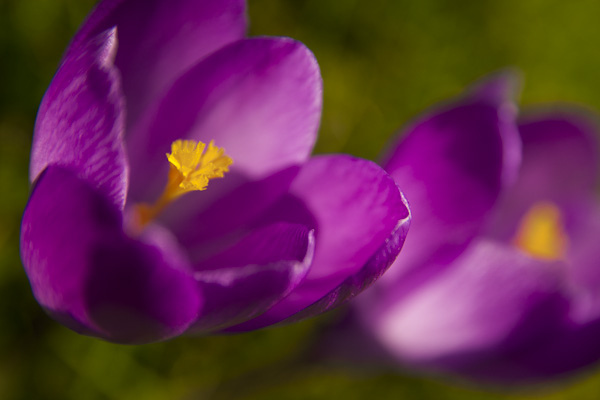
I took this in Hull University’s Business School grounds.
The advice “if you want to make more interesting photos, put yourself in front of more interesting things” is universally true. But while this usually means going to far-flung places, it’s possible when you don’t have this option, to reinterpret it to suit your local environment.
I call it, simply, “think smaller.” People don’t tend to look at the smaller stuff, at local characters, to stop and notice things they see frequently.
There are interesting subjects around you, wherever you are. If, as a photographer, you find these details and make them beautiful, fascinating, or amusing, then not only are you developing your general photography skills through practice, but also your commercial viability, in regard to creating good ideas with limited budgets or boring subjects, in the long term. It can be a form of creative limitation to challenge your imagination.
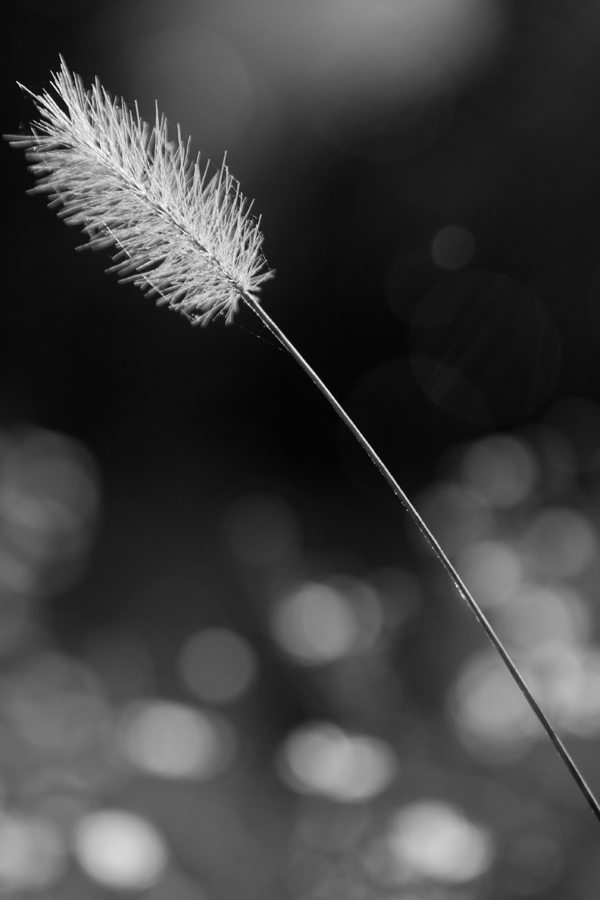
This was one of my first attempts at backlighting which worked. I took it in a meadow in a North Carolina state park.
Application
There seems to be a never-ending stream of people trying to get into nature and landscape photography. This is is my area of interest too, so I’m writing this from that perspective.
The philosophy itself, however, applies equally to all areas of photography. Interested in cityscapes and architecture? Hunt down the signs, doorways and before you try to capture whole buildings. Portrait and fashion? Can you capture an interesting local character’s face before you try a model’s entire body?
Commercial? Can you make your phone, a beer bottle or even a battery interesting, before trying your hand at cars and athletes? Manage your expectations, think smaller to learn how to see the details, and learn the important techniques like composition and lighting (even if that’s just understanding natural light) in an easier, no-pressure environment. It will make you better in the end.
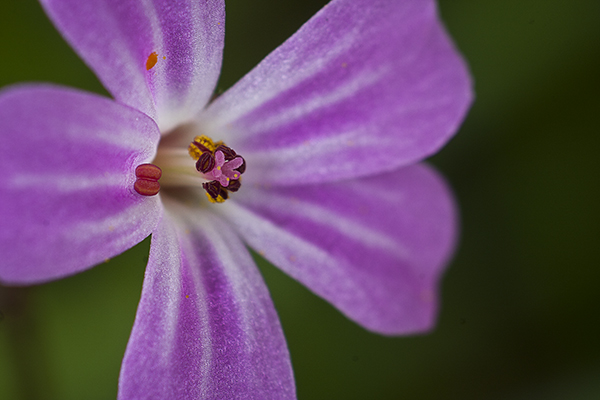
I took this on some wasteland near my house, testing a very experimental macro setup.
I’m not saying you need to spend a lot on macro lenses (although a nifty fifty and maybe some extension rings might not hurt). Simply take note of how things look with what you have – even if it’s just a phone.
Start viewing the world a square foot or so at a time, and look at it graphically, walking around in Live View mode just looking at how things appear in two dimensional representation will help.
Just wander around your park or recreational area, anywhere with a variety of greenery that’ll support a variety of interesting photos.
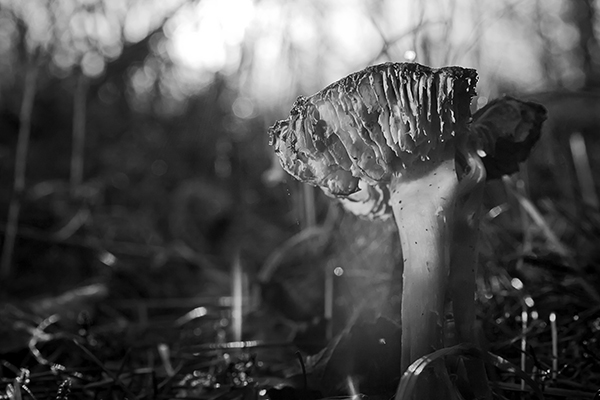
Trying out mixing strobe and natural light in a small plantation on a local rec area.
Conclusion
You can see here some of the photos I took over the course of last year and into January while I was trying to think smaller and shoot nearly every day. All of them have been an important stepping stone somewhere along the road of my photography career to date, often moments of revelation as I’ve discovered or solidified a new technique.
You’ll note that none of them were taken anywhere particularly special, just around and about wherever I was at the time. While I’m certainly envious of many photographers’ local environments and try to work in larger ones, I no longer feel paralyzed or unable to produce work of any value when I always have the details to fall back on.
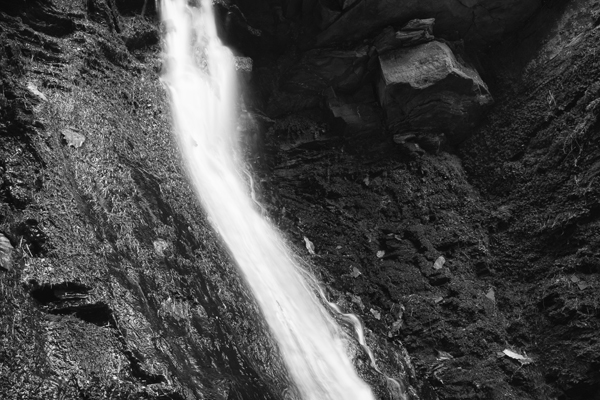
Working with light and texture and getting to grips with long exposure in a local wood.
I hope this provided some inspiration or incentive to pick up your camera, regardless of your skill level. Happy shooting! Questions or comments? Hit up the comments below.
via Phototuts+ http://photo.tutsplus.com/articles/theory/quick-tip-not-in-the-best-location-think-smaller/?utm_source=feedburner&utm_medium=feed&utm_campaign=Feed%3A+Phototuts+%28Phototuts%2B%29
Comentaris
Publica un comentari a l'entrada