A Guest Post by Rick Berk
All DSLR systems offer a dizzying selection of lenses for their cameras. These range from fisheyes that give a 180° field of view, to telephoto lenses up to 800mm or more. You’ve got zooms, primes, macro, super telephoto, and of course, tilt-shift lenses as well.
In my time as a photographer I’ve often had friends, students, or casual acquaintances ask me “What lens should I get?” There is no one right answer to this question, and it can lead to more confusion unless I ask a few questions myself.
First off, and easiest to figure out is, “What do you want to shoot?” It could be sports, wildlife, birds, landscapes, architecture, portraits, or any number of other subjects. Next is to find out what their budget is. The cost of the lens depends on several things. Less expensive lenses will generally have variable apertures, meaning as you zoom, the maximum aperture gets smaller. More expensive lenses have a fixed aperture. The good news is that all major camera and lens manufacturers offer a variety of focal lengths to satisfy most budgets.
After those two questions are answered it becomes more difficult. I try to lead them to their choice, rather than just tell them “Get this lens.” So let’s take a look at different types of lenses and how they can be used.
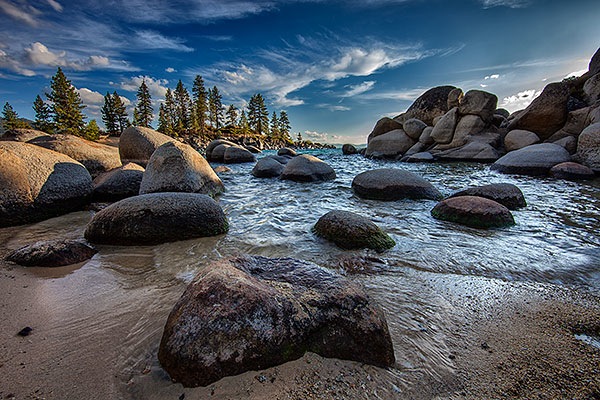
We’ll start with the wide angles. In my early days as a photographer, I NEVER used wide angle lenses. I started my career as a sports photographer and rarely used anything shorter than a 70-200, often going for 400mm f2.8 or 600mm f/4 lenses. As I began shooting landscapes as more of a hobby, I began to discover the magic of wide angles. Wide angles give a wide expansive view, and when used correctly, can wrap you in the scene. My favorite lenses for landscape work tend to be in the ranges from 14mm f/2.8, 16-35 f/2.8, and 24mm f/1.4.
Wide angles should be used when prominent foreground objects are present. The primary mistake made by new photographers is to use wide angles incorrectly- by not being close enough, having no interest in the foreground, or by trying to include too much in the scene. Wide angles are also handy in tight areas, like small rooms, cars, caves, etc. They can give volume to the small area. Wide angles have the potential to drastically change your photography.
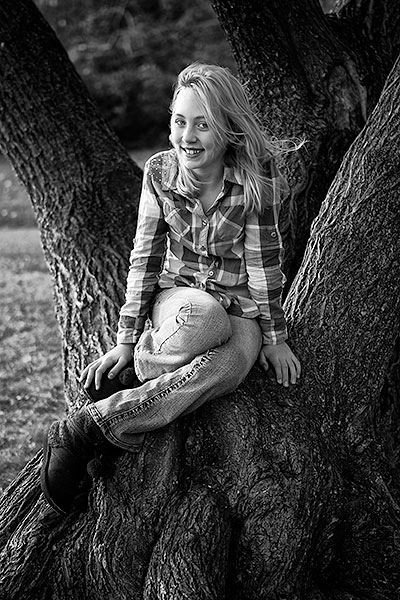
Standard lenses tend to range from about 35mm up to around 85mm. Lenses in the standard zoom range will cover moderate wide angles- typically 24mm to 35mm, to moderate telephoto lengths- around 70mm and up to about 105mm. Standard zoom lenses are great “walk around” lenses. They are versatile, allowing both for wide angle work such as a landscape, or zooming in to the telephoto end of the lens to take a great portrait.
Standard zooms are generally included in many SLR kits that come with lenses. 18-55mm, 18-135mm, 24-105mm, 24-70mm, and others are popular standard zooms. However, there are also standard prime lenses. Prime lenses are lenses that are just one focal length. Back in the good ol’ days of film, the most popular standard lens was a 50mm. When I was a student, everyone in the class started with a 50mm lens. Whether you choose a zoom or a prime is up to you. Most people tend to feel that zooms offer more bang for the buck these days, while a prime forces you to think more about composition and point of view, simply because it can’t zoom.

More often than not, when I speak to neophyte photographers looking to purchase their next lens, they are looking for something on the telephoto end. The most popular seems to be various flavors of 70-300mm or 70-200mm. These lenses are excellent when used properly. However, too often, telephoto zooms allow the photographer to become lazy.
“If your pictures aren’t good enough, you’re not close enough,” said famed war photographer Robert Capa. Telephoto zooms allow one to stand back a little when the subject isn’t quite as approachable, or when your subject might be feeling overwhelmed by the presence of the camera. This makes telephoto zooms extremely useful for portraiture, but keep in mind Capa’s words, as it is easy to get lazy and let the lens do the work for you.
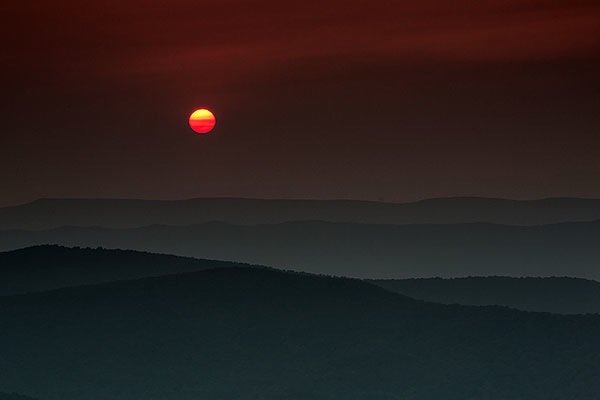
Telephoto lenses compress distance, making everything appear closer, as opposed to wide angles which distort perspective and make things look further away. This can be useful for landscapes when you want the sun or moon to appear large in comparison to other objects in the image. In this shot of Shenandoah Valley at sunset, the telephoto lens compresses the distance, making the layers of mountains and mist look almost flat.
Of course, telephoto lenses are also excellent for sports, nature, and wildlife, where it can be difficult to get close. Sports, however, presents its own set of challenges. To be able to stop action without blurring, you need to use a fast shutter speed. Typically, faster telephoto lenses are required. Faster telephoto lenses have larger maximum apertures.
A “fast” lens is usually one that has an aperture of f/4, f/2.8 or larger. If sports is one of your primary subjects, a telephoto zoom such as a 70-200 f/2.8 is an excellent choice. If you really want to shoot like the pros, you’ll want a 300mm f/4, or 300mm f/2.8 or 400mm f/2.8. These lenses are great for getting you closer to the action, but you need to be sure your shutter speed is fast enough. Too slow a shutter speed will result in motion blur. Typically, AT LEAST 1/500 to 1/1000 shutter speed is the minimum. Using these longer lenses can be challenging to track movement, so it becomes much easier if the subject is coming directly at you, rather than trying to track movement parallel to the camera.
Beyond the usual types of lenses, there are a variety of specialty lenses available. Like shooting tiny things? Try a macro lens. Architecture? A tilt-shift or perspective correction lens might be your choice. There is a lens for every purpose, it’s just a matter of putting it to good use. As always, remember that a lens is just another tool on the camera; it’s up to the photographer to make it work.
Rick Berk is based in New York and has been involved in photography for 20 years, shooting portraits, landscapes, and professional sports. His images can be viewed and purchased at www.rickberk.com.
Post originally from: Digital Photography Tips.
Check out our more Photography Tips at Photography Tips for Beginners, Portrait Photography Tips and Wedding Photography Tips.
Choosing Lenses: When to Use Which Lens and Why
via Digital Photography School http://digital-photography-school.com/choosing-lenses-when-to-use-which-lens-and-why?utm_source=feedburner&utm_medium=feed&utm_campaign=Feed%3A+DigitalPhotographySchool+%28Digital+Photography+School%29
Your photography has been great. Even the theories you have given about camera lenses are very useful. All in all, your article is mind blowing. Thank you very much for your sharing. Wish you all the best. May you live long.
ResponEliminatransparent background photoshop